

ETP & WTP (Supply, Installation & Commissioning)
IntroductionIntroduction
Effluent Treatment Plant (ETP) and Water Treatment Plant (WTP) are critical
infrastructure for managing water quality in industrial, commercial, and municipal sectors. These
plants ensure compliance with environmental regulations and sustainable use of water resources.
ETP: Treats wastewater from industries to remove harmful pollutants before discharge or
reuse.
WTP: Treats raw water (from rivers, borewells, etc.) to make it suitable for drinking or
industrial use. afterwards.
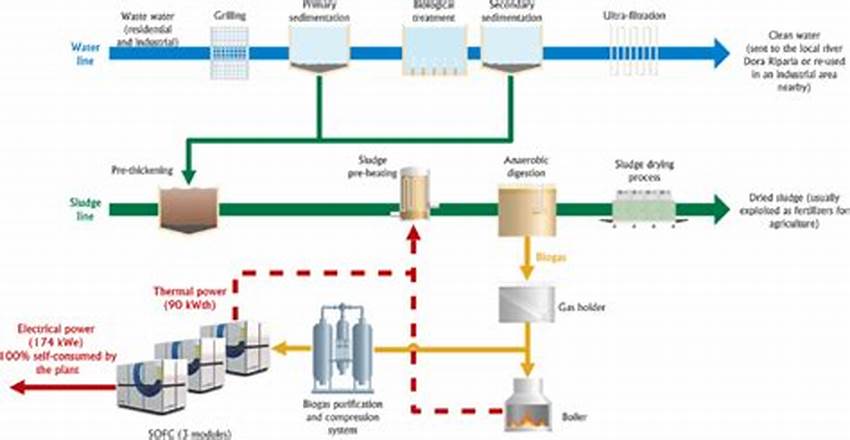
Scope of Work: Supply, Installation & Commissioning (SIC)
The SIC process includes:
✅ Supply
Delivery of all mechanical, electrical, and instrumentation components:
o Pumps, tanks, blowers, filters
o Valves, piping, control panels
o Dosing systems and SCADA (optional)
✅ Installation
Civil Work: Foundation for tanks and equipment, construction of sumps, trenches, etc.
Mechanical Installation: Mounting and aligning pumps, blowers, and pipelines.
Electrical Work: Laying of cables, panel installation, earthing, and lighting.
Instrumentation: Installation of sensors, meters, and automation systems.
✅ Commissioning
Pre-commissioning tests (leak tests, rotation checks, etc.)
Dry run and trial operations
Process parameter optimization
Training of client personnel
Handover with documentation
Effluent Treatment Plant (ETP)
Physico-chemical and biological ETP for textile, dyeing, washing, chemical and food-processing effluent — designed to the DoE discharge standard for your category.
Water Treatment Plant (WTP)
Process and potable water treatment — iron and manganese removal, arsenic removal, softening, filtration and disinfection.
Sewage Treatment Plant (STP)
Domestic sewage treatment for factories, commercial buildings and residential developments.
Reverse osmosis & demineralisation
RO, DM and softening plants for boiler feed, process water and high-purity applications.
Biological treatment systems
Activated sludge, MBBR, SBR and [MBR] systems — selected against your organic load, not a standard package.
Sludge handling & dewatering
Thickeners, filter presses, [belt / screw presses] and sludge drying beds, with the disposal route addressed.
ZLD & water recovery
Zero liquid discharge and treated-water recovery systems where the buyer, the regulator or the water bill requires it.
Plant upgrade & retrofit
Capacity expansion, technology upgrade and rehabilitation of underperforming existing plants.
What's included in the package
An ETP or WTP from us is delivered as six things. If a supplier hands you only equipment and a layout, the compliance risk stays entirely with you.
01 · Effluent characterisation & process design
Laboratory analysis of your actual effluent — flow, pH, BOD, COD, TDS, TSS, colour and any process-specific contaminant — and a treatment train designed to take that stream to your required discharge limit. Not a capacity picked from a catalogue.
02 · Process calculation & equipment sizing
Tank volumes, retention times, aeration demand, chemical dosing rates and pump duties, calculated and documented — so an independent engineer can verify the plant is sized for your load rather than for the price point.
03 · DoE documentation & clearance support
The drawings, process description and design data the Department of Environment requires for environmental clearance. [State plainly whether you prepare and submit, or support the client's own submission.]
04 · Supplied equipment, with data sheets
Blowers, pumps, dosing systems, membranes, media, instruments and control panel — each with make, model and data sheet, so you know exactly what was installed, not just what was invoiced.
05 · Installation, commissioning & performance test
Civil coordination, mechanical and electrical installation, biological seeding and stabilisation, and a witnessed performance test showing treated-water parameters against the DoE limit before handover.
06 · Operator training & O&M documentation
Your operators trained on the plant they will actually run, plus O&M manuals, dosing schedules, troubleshooting guides and the logbook format a DoE inspector expects to see filled in.
How we deliver it
- Test the effluent before designing the plant. We sample and analyse your actual discharge across a production cycle. A textile unit's effluent changes with the shade being run — a plant sized on a single sample or an assumed load will fail on the day the darkest batch goes through.
- Design to the discharge standard that applies to you. Discharge limits differ by industry category and by whether you discharge to inland surface water, an irrigable land area or a public sewer. The treatment train is selected against the limit you are actually held to.
- Size for the peak, not the average. Equalisation is designed for real production peaks and shift patterns. Most ETP failures in practice are hydraulic — the plant met its average duty and drowned on the peak.
- Cost the running, not just the buying. We calculate chemical consumption, power draw, sludge volume and manpower before you commit. A plant that is cheap to buy and unaffordable to run gets switched off — and an ETP that is off is worse than none, because you have paid for it and still fail the test.
- Commission with a witnessed performance test. Biological systems need seeding and stabilisation before they mean anything. We run the plant up, stabilise it, and demonstrate treated-water parameters against the limit with you present and results recorded.
- Hand over to trained operators, with support after. The plant is handed to people who have been trained on it, with a dosing schedule and a logbook. We stay reachable — and where you want it, we run scheduled O&M.
Environmental compliance in Bangladesh
An ETP here answers to three parties, not one: the regulator, the buyer, and the water table. Four conditions shape almost every plant we design in this country.

DoE standards and environmental clearance
Industrial discharge is governed by the Department of Environment under [the Environment Conservation Rules — CONFIRM year and current amendment], with discharge limits set by industry category and receiving body. An Environmental Clearance Certificate is a condition of operating, and the ETP is what it rests on.
Textile and RMG effluent
Dyeing and washing effluent carries high colour, COD and TDS, and varies sharply between shades and batches. Colour removal and TDS are where most textile ETPs underperform — and where a buyer audit or a DoE test is most likely to catch a plant out.
Buyer and brand audits
For export factories, compliance is not only regulatory. Brand audits, [ZDHC / Higg / buyer-specific] programmes and effluent testing by the buyer's own labs increasingly determine whether orders continue. A plant that satisfies DoE but fails a buyer protocol still costs you business.
Water scarcity and groundwater depletion
Falling groundwater tables around Dhaka and the industrial belts are making abstraction harder and costlier. Treated-water recovery and reuse is moving from a sustainability gesture to a straightforward cost decision.
Standards and design basis
Regulatory: Department of Environment (DoE) discharge standards under [Environment Conservation Rules, YEAR] · Environmental Clearance Certificate requirements
Design references: [Metcalf & Eddy / WEF MOP / relevant international practice] · [ISO 9001 quality procedure]
Water quality: [WHO / Bangladesh drinking water standards] for potable applications · [boiler feed water standards] for process applications
Buyer programmes, where applicable: [ZDHC wastewater guidelines · Higg FEM · brand-specific effluent protocols]
Treatment technologies we build
[Physico-chemical · activated sludge · MBBR · SBR · [MBR] · DAF · multi-grade and activated carbon filtration · RO / DM / softening · sludge dewatering]
List only what you have actually built and can support. A technology named here will be asked about in the first meeting — and an MBR you have never commissioned is a claim that unravels quickly.
Operation & maintenance (O&M) contracts
A distinct engagement, and the one that decides whether the plant still passes in year three. An ETP is a living biological and chemical process, not an installed object. We provide O&M contracts covering scheduled servicing, chemical supply and dosing optimisation, effluent testing, operator support and priority call-out — with results documented for DoE and for your buyers.
Common triggers
- A newly commissioned plant with no experienced operator on staff
- Treated effluent failing DoE parameters, or drifting toward the limit
- Chemical and power costs running far above what was budgeted
- A plant inherited with a factory, of unknown condition and history
- A buyer or brand audit requiring documented effluent monitoring
- Sludge accumulating with no managed disposal route
- A plant partly or wholly out of service and needing recommissioning
Typical programme
| Plant | Characterisation & design | Approval | Supply, install & commission |
|---|---|---|---|
| ETP, [X] m³/day — textile / dyeing | [X–X] weeks | [X–X] weeks | [X–X] weeks |
| ETP, [X] m³/day — general industrial | [X] weeks | [X–X] weeks | [X–X] weeks |
| WTP / RO, [X] m³/hour | [X] weeks | [X] weeks | [X–X] weeks |
| STP, [X] m³/day | [X] weeks | [X] weeks | [X–X] weeks |
Programme excludes civil construction of tanks, which usually governs on a new plant, and the biological stabilisation period before a performance test is meaningful — typically [X–X] weeks on a biological system. Imported equipment lead time is confirmed at quotation.
Common questions
It is driven by flow rate, effluent strength and the discharge limit you must meet — a textile ETP handling high colour and COD costs materially more per m³ than a general industrial plant of the same capacity. [State your quotation basis and, if you can, an indicative per-m³ range. This is one of the most searched questions in this market and almost nobody answers it.]
Sized on your actual water consumption, production schedule and peak flow — not on floor area or machine count. We measure or estimate your discharge across a full production cycle before proposing a capacity, because an undersized plant fails at peak and an oversized one wastes capital and runs inefficiently.
That is the design basis, and we demonstrate it at commissioning with a witnessed performance test against your applicable limits. Sustained compliance then depends on operation — correct dosing, a healthy biological system and maintained equipment — which is exactly what the O&M contract covers.
[State plainly whether you prepare and submit the documentation, or provide the design data and drawings for the client’s own submission. This is one of the first questions a compliance manager asks.]
Chemicals, power, sludge disposal and manpower — all four calculated and given to you before you commit. We would rather quote a plant that costs slightly more to install and materially less to run, because that is the one that stays switched on.
Yes. We start with a performance audit — effluent testing, hydraulic and process check, and an equipment condition survey — then give you a written position on whether the plant can be brought into compliance by optimisation, upgraded in stages, or needs replacing. Often the answer is cheaper than you expect.
For a new plant, yes — it is built alongside your operation and tied in at the end. For a retrofit or upgrade of a running plant we phase the work, and where the biological system must be taken down we plan the interim discharge arrangement with you in advance rather than improvise it.
[Confirm whether you supply treatment chemicals on an ongoing basis. Recurring chemical supply alongside an O&M contract is a strong commercial position — say so if you offer it.]
Send us your effluent, and we'll tell you what it needs.
Give us your production process, water consumption and discharge point. We’ll characterise the effluent, tell you which treatment train meets your discharge limit, what the plant costs to build and what it costs to run — before you commit to anything.
[+880 XXXX XXXXXX] · [info@innovateengineering.com.bd]